




Email: sales@fsain.com.cn
Phone: +86-0571-85101359
What U-Space Reveals About the Future of Low-Altitude Airspace
2026-06-11
Table of Content
[Hide]
As drone applications continue to expand worldwide, low-altitude airspace is emerging as a new frontier for innovation, connectivity, and infrastructure development.
Among the many initiatives shaping this evolution, Europe's U-Space framework stands out as one of the most ambitious efforts to enable safe, scalable, and digitalized operations. More importantly, it reflects a broader trend: the industry is moving beyond individual aircraft and toward the management of low-altitude airspace itself.
From Drone Operations to Airspace Operations
U-Space was created to support increasingly complex drone activities through services such as Remote ID, flight authorization, geo-awareness, and real-time traffic information.
Behind these technologies lies a significant shift in perspective.
The focus is no longer limited to whether a single drone can fly safely. Instead, attention is turning to how multiple aircraft, diverse missions, and various stakeholders can coexist within a shared airspace.
In other words, the industry is evolving from aircraft operations to airspace operations.
A Growing Consensus Around Low-Altitude Infrastructure
U-Space also demonstrates that the future of low-altitude airspace requires more than aircraft and applications.
As operations become more frequent and environments more complex, the need for supporting infrastructure becomes increasingly evident.
Around the world, technologies and services such as:
Remote ID and cooperative surveillance;
Digital airspace services;
Traffic information and flight authorization;
Multi-sensor monitoring;
Situational awareness and command platforms;
are gradually becoming essential components of the low-altitude ecosystem.
This reflects a growing consensus: The future of low-altitude airspace will be built upon infrastructure, not aircraft alone.
Safety Is Becoming a Common Foundation
Whether in Europe, North America, or Asia, one common trend is emerging.
As the number of aircraft increases and operations become more diversified, ensuring safe and orderly airspace operations is becoming a shared priority.
Trusted identification, real-time awareness, intelligent monitoring, and coordinated management are increasingly viewed as fundamental capabilities for sustainable low-altitude development.
High-level safety is no longer merely a protective measure. It is becoming a prerequisite for large-scale and long-term growth.
From Detecting Drones to Understanding Airspace
From Fsain Technology's perspective, the evolution of low-altitude airspace is driving a shift in focus—from simply detecting individual drones to building a deeper understanding of the airspace environment as a whole.
As operations become increasingly interconnected, the ability to perceive, interpret, and manage airspace information is becoming a critical foundation for future low-altitude infrastructure.
This transformation is accelerating the convergence of several key capabilities:
Cooperative surveillance, enabled by Remote ID and networked airspace services;
Non-cooperative target awareness, supported by RF, drone radar detection, and electro-optical sensing technologies;
Multi-sensor data fusion, providing a more comprehensive and reliable picture of the airspace;
AI-powered situational awareness, enhancing information analysis and decision support.
Together, these technologies are enabling a transition from isolated sensing systems to intelligent airspace awareness.
Toward Intelligent Low-Altitude Infrastructure
U-Space demonstrates that the future of low-altitude airspace extends far beyond traffic management alone.
As airspace becomes increasingly dynamic and diverse, the industry is moving toward a more integrated architecture that combines:
Digital airspace services and U-Space frameworks;
Remote ID and cooperative surveillance;
Awareness of non-cooperative targets and unauthorized operations;
RF, radar, and electro-optical sensing technologies;
Multi-sensor data fusion and AI-powered situational awareness;
Intelligent command and management platforms.
Rather than existing as separate systems, these capabilities are gradually converging into a unified infrastructure designed to support safe, efficient, and sustainable low-altitude operations.
Building the Foundations for the Next Generation of Airspace
Although different regions may adopt different approaches, one shared trend is becoming increasingly evident: “The future of low-altitude airspace will rely not only on aircraft and applications, but on the intelligence and resilience of the infrastructure that supports them.”
At Fsain Technology, we believe that high-level safety and comprehensive situational awareness are essential enablers of future airspace operations.
As the industry moves toward greater connectivity and autonomy, building trusted and intelligent low-altitude infrastructure will be key to unlocking the next generation of aerial innovation.
References
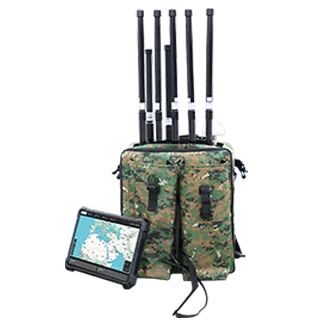
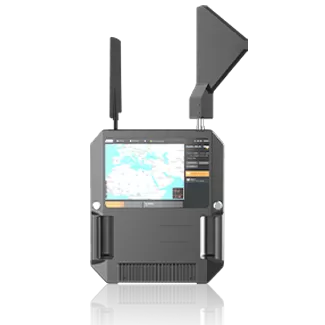
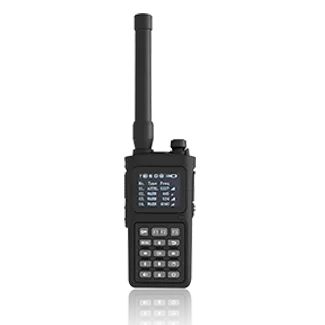
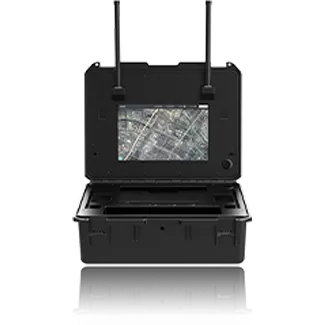
Additional Portable Anti-Drone Devices