





Email: sales@fsain.com.cn
Phone: +86-0571-85101359
Data Fusion for Drone Detection | Fsain Drone Tracking System
2026-05-07
Table of Content
[Hide]
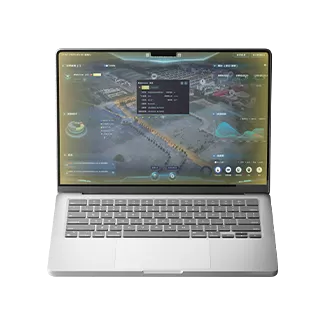
In recent years, the rapid proliferation of drones has raised significant concerns in areas such as public safety, airport security, critical infrastructure protection, and military defense. As drones become more accessible and technologically advanced, detecting and tracking unauthorized or potentially dangerous drones has emerged as a pressing challenge. One of the most effective strategies to address this issue is data fusion for drone detection—a method that combines inputs from multiple sensor types to deliver comprehensive situational awareness. In this blog post, we'll explore how data fusion enhances drone detection capabilities, why single-sensor systems fail, and how Fsain's integrated solutions are redefining UAV monitoring.
Challenges of Single-Sensor Drone Detection
Many traditional setups rely on a single sensor type—radar, RF detectors, or EO/IR cameras—to track UAVs. While useful, these tools have inherent limitations:
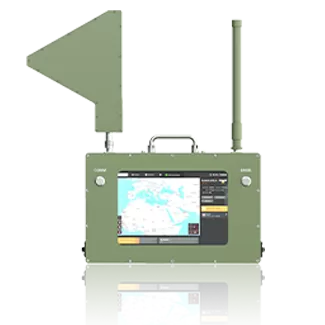
RF Spectrum Detection: operating as a passive sensor, offers superior concealment and cost-effectiveness. It provides 360-degree omnidirectional coverage with the ability to precisely identify drone models, pilot locations, and distinguish friend from foe. However, its limitations include a lack of precise ranging capabilities, susceptibility to interference in complex urban electromagnetic environments, and ineffectiveness against autonomous drones maintaining "radio silence."
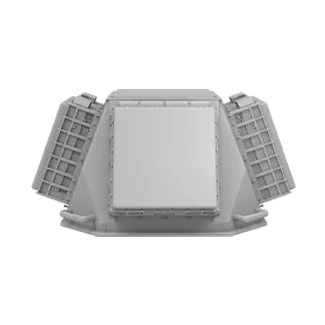
Radar Detection: excels in all-weather operations, capable of actively detecting all airborne objects—including silent targets—while providing precise data on distance, altitude, and velocity. However, as an active emitter, radar risks exposing its own location and often suffers from high false alarm rates when detecting "Low, Slow, and Small" (LSS) targets with minimal Radar Cross Section (RCS), making it difficult to distinguish drones from birds.
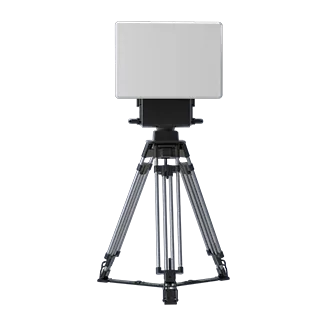
Electro-Optical/Infrared (EO/IR) Detection: provides the most intuitive "what you see is what you get" visual confirmation, allowing for the assessment of target details (such as payloads) while remaining passive. Nevertheless, limited by a narrow Field of View (FOV) and dependency on weather conditions (fog, haze, or darkness), it is ill-suited for independent wide-area search and is best utilized for target verification and precision tracking when cued by other sensors.
Benefits of Multi-Sensor Data Fusion for UAV Tracking

To overcome single-sensor flaws, modern solutions leverage multi-sensor data fusion, integrating radar, RF, EO/IR, and acoustic sensors into a unified framework.
Why Fusion Matters:
Complementary Strengths: Radar detects motion; cameras confirm identity; RF sensors track signals even when visual contact is lost.
Improved Track Continuity: Correlate detections across sources to maintain tracks when one sensor fails.
Reduced False Alarms: Cross-validate to avoid misidentifying drones
All-Weather Coverage: Operate day/night in rain/snow.
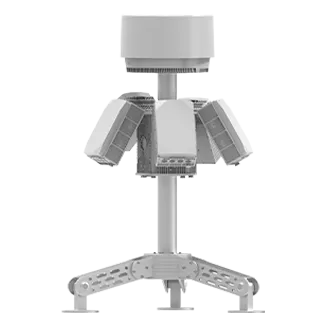
Fsain addresses this with its end-to-end UAV surveillance platform, integrating Fsain RF Detector, EO/IR cameras, and radar. By fusing high-resolution data from these devices, our systems ensure continuous coverage in complex urban environments—turning disparate inputs into actionable intelligence for real-time threat response.
Example: A small quadcopter enters a restricted zone:
Radar picks up an unknown object.
RF Detector captures nearby control signals.
EO/IR camera zooms in to confirm it's a drone.
Only sensor fusion stitches these into a high-confidence track.
How Fsain's Anti-Drone Management Software Works
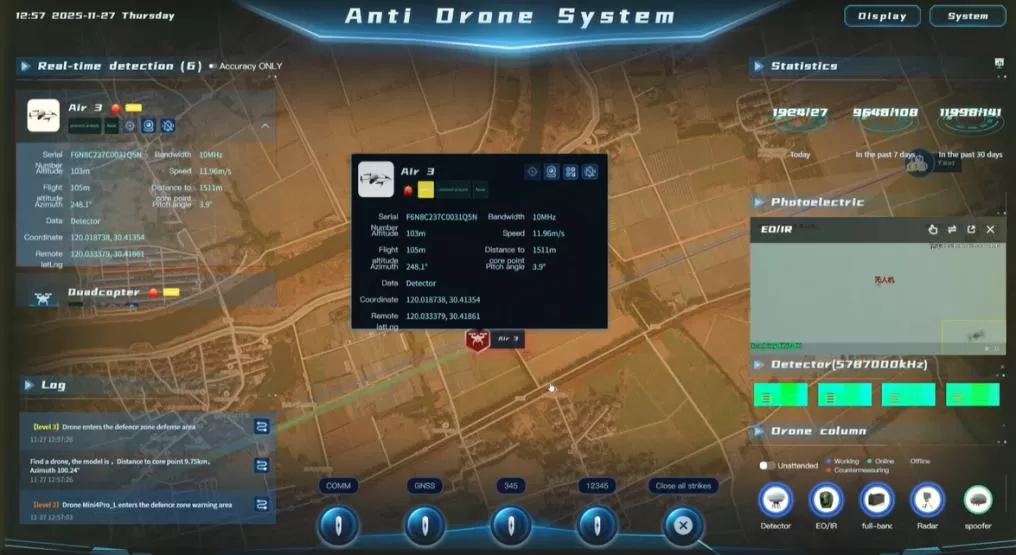
Effective data fusion requires more than hardware—it needs a software platform to orchestrate heterogeneous sensors and manage data at scale. Enter Fsain Anti-Drone Management Software, a unified ecosystem for sensor connectivity, data normalization, and AI-driven analytics.
Core Features:
✅ Heterogeneous Device Integration
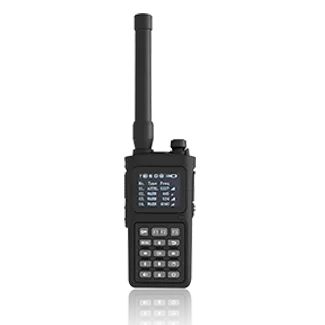
Seamlessly connect any sensor (radar, commercial PTZ cameras, portable RF scanners) regardless of brand/protocol. The software acts as a “central nervous system,” normalizing and synchronizing data streams.
✅ Real-Time Data Fusion Algorithms
Powered by Fsain's AI fusion algorithm,we can
Align timestamps/spatial coordinates across devices.
Fuse detections via probabilistic models (Kalman filters, Bayesian networks).
Assign confidence scores based on corroborating evidence.
Predict trajectories to preemptively reacquire lost targets.
Deployed with sensor-level fusion (raw data pre-processing) or decision-level fusion (classified output merging), per application needs.
Conclusion: Unlock Superior Drone Detection with Fsain
As drone threats evolve, single-sensor detection is obsolete. Data fusion for drone detection—powered by Fsain's platform—offers a robust, scalable solution. By adopting Fsain's multi-sensor system, organizations can:
Minimize lost tracks,
Boost detection accuracy,
Ensure 24/7 surveillance,
Respond faster to threats.
Whether securing airports, borders, or stadiums, invest in Fsain's fusion-based system for full-spectrum aerial security.
Ready to upgrade? Explore our Fsain Anti-Drone Management Software or schedule a demotoday.
References
Additional Portable Anti-Drone Devices